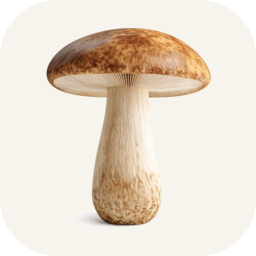
King Oyster Mushroom (Pleurotus eryngii)
King oyster is the largest species in the Pleurotus genus, identified by a thick, dense white stem and small tan cap, native to Mediterranean and steppe regions but sold almost exclusively cultivated rather than foraged.
Identification
King oyster has a thick, dense, club-shaped white stem topped with a comparatively small tan or brown cap, an inverted proportion from most gilled mushrooms and the trait that distinguishes it from standard oyster mushrooms (Pleurotus ostreatus), which have thin stems and a much larger cap. It's native to temperate, humid areas of the Mediterranean, Asia, and North Africa, and is extensively cultivated in East Asia and increasingly in the US, almost always sold cultivated rather than wild-foraged.
Nutrition
Per Nutrition Advance's review of published nutrition data, king oyster is low in calories and fat while providing dietary fiber and plant-based protein, along with B vitamins (notably riboflavin and niacin) and minerals including potassium, phosphorus, selenium, and copper. This page doesn't cite exact per-100g figures for this specific species, since it wasn't confirmed against a dedicated USDA FoodData Central entry; for a species with confirmed USDA figures, see the shiitake nutrition page.
Lookalike risk
King oyster carries no widely reported toxic lookalike, largely because its thick, meaty stem shape sets it apart from the thinner-stemmed gilled mushrooms most dangerous species belong to. Since it's rarely foraged wild in the US, this is a lower-stakes identification case than the species covered on the Dangerous vs. Edible Mushrooms guide; any wild oyster-type find should still be checked against a named field guide regardless.
More Species Identification
Frequently Asked Questions
Sources
- Nutrition Advance, King Oyster Mushrooms: Nutrition Facts and Benefits: Nutrient category summary (fiber, protein, B vitamins, minerals) for king oyster mushroom