
Is Host Defense Turkey Tail Good?
Mushroom mycelium grown on fermented rice; no beta-glucan (an immune-supporting carbohydrate) percentage, PSK/PSP (two well-studied Turkey Tail compounds) content, or third-party testing claim is published on the brand's own product page.
What the label discloses
Host Defense's own product page describes this product as mushroom mycelium grown on a fermented rice substrate, stating it is "Powered by Mushroom Mycelium" with "no fillers." It does not state whether the fermented rice substrate is separated from the finished product or how much of the capsule's weight is mycelium versus substrate, the same disclosure gap flagged on Host Defense's Chaga and Cordyceps products reviewed elsewhere on this site.
Three things this label does not state: a beta-glucan percentage, whether PSK or PSP (the two extracts behind Turkey Tail's published cancer trials) are present at any measured level, and a third-party testing result. The page instead argues that immune benefits come from "a very wide range of constituents, not just beta-glucans," language that sidesteps stating a specific number rather than disclosing one.
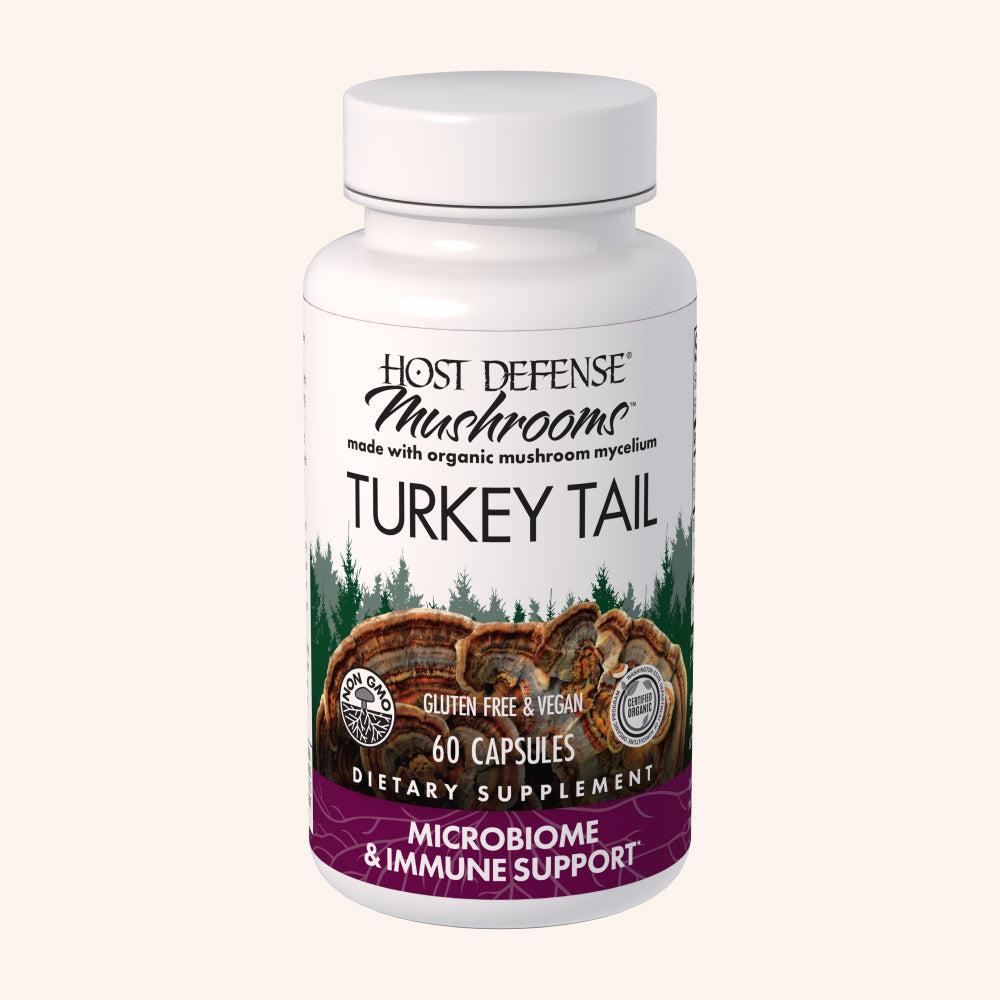
Host Defense Turkey Tail Capsules
Mushroom mycelium grown on fermented rice substrate. Beta-glucan percentage, PSK/PSP content, and third-party testing results are not disclosed on the label.
We may earn a commission if you buy through this link, at no cost to you.
For how this compares to other named brands, see the Turkey Tail hub. For dosing context, including how any product's serving size compares to the trial dose behind Turkey Tail's cancer research, see Turkey Tail Dosage & Consumption.
More Turkey Tail Reviews
Frequently Asked Questions
Sources
- Host Defense, Turkey Tail Capsules product page: Brand's own disclosure of mycelium-on-fermented-rice source material and absence of a published beta-glucan percentage, PSK/PSP content, or third-party testing claim