
Lion's Mane Supplement: Fruiting Body vs. Mycelium Compared
Lion's Mane capsule labels differ most in what they choose to disclose: one names an exact beta-glucan percentage and a third-party verification method, the other names an extraction source but no lab-verified potency figure.
Why extraction source is the first thing to check
A Lion's Mane supplement is extracted from one of two plant parts, and not every label says which. The fruiting body is the visible mushroom; mycelium is the root-like network, sometimes grown on rice or oats and harvested with that grain substrate still attached. Per Nammex's published beta-glucan testing, fruiting-body extracts run upward of 30% beta-glucans with under 3% starch, while mycelium-on-grain products can run 35-40% residual grain starch with as little as 1-5% beta-glucans, even when the label says "mushroom extract."
| Product | Extraction | Verification | Serving | Price |
|---|---|---|---|---|
| Real Mushrooms, Organic Lion's Mane Extract Capsules | Fruiting body only, hot-water extracted, stated "never mycelium fermented grain" | Brand guarantees >30% beta-glucans, Purity-IQ NMR authenticity testing, third-party lab verified | 2 capsules daily; exact mg per capsule not published on the product page (only the beta-glucan percentage is disclosed) | $34.95 for 120 capsules (60-day supply) |
| Host Defense, Lion's Mane Capsules | Mycelium grown on fermented brown rice biomass, labeled "Powered by Mushroom Mycelium" | No beta-glucan percentage or third-party lab result published on the product page | 2 capsules daily; label states roughly 1 g of mycelium/fermented-rice biomass per serving | $20.95 for 30 capsules (15-day supply) |
What neither label tells you
Neither product page reviewed here publishes an exact milligram figure per capsule for Lion's Mane content, only a beta-glucan percentage (Real Mushrooms) or a general mycelium/rice-biomass weight per serving (Host Defense). That matters because the clinical trial with the clearest published cognitive results used roughly 3,000 mg/day, split into three 1,000 mg doses, per Mori et al., 2009. Without a milligram figure on the label, a buyer can't compare a product's serving size to that study dose at all, only compare extraction type and verification method. Check a product's full Supplement Facts panel, not just its marketing copy, before assuming a serving matches any specific study.
For the underlying research this comparison is built on, see the Lion's Mane hub. A dosage and side-effects breakdown, covering how much each named study used, is available at Lion's Mane Dosage & Side Effects.
The two products, side by side
Both are named products with a real Amazon listing. The verdict label under each one traces directly to the Verification column above, not a separate opinion.
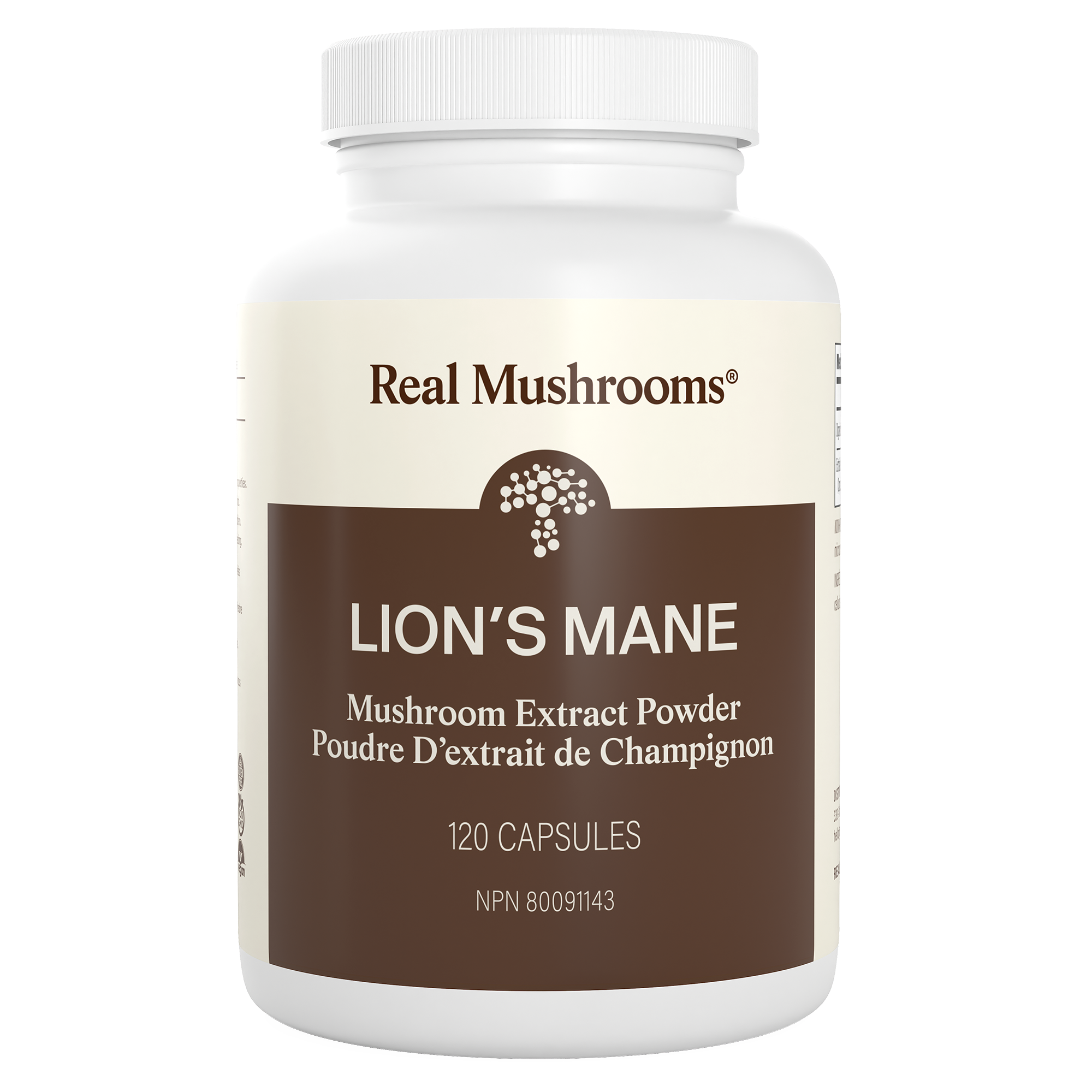
Our Pick
Real Mushrooms Organic Lion's Mane Extract Capsules
Fruiting body only, hot-water extracted. Label states no mycelium or grain filler. Brand guarantees over 30% beta-glucans with third-party lab verification named on the product page.
We may earn a commission if you buy through this link, at no cost to you.
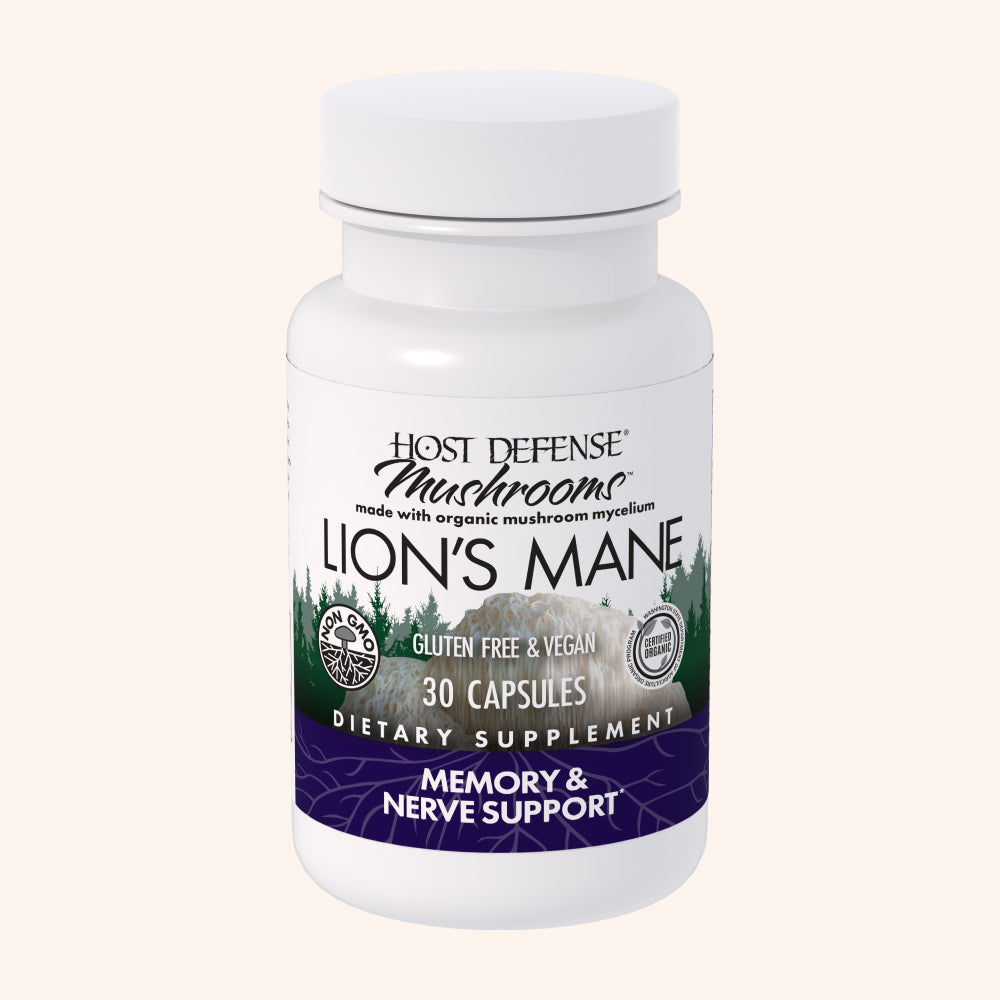
Host Defense Lion's Mane Capsules
Mycelium grown on fermented brown rice biomass, per the label. No beta-glucan percentage or third-party lab result published on the product page as of this writing.
We may earn a commission if you buy through this link, at no cost to you.
More on Lion's Mane
Frequently Asked Questions
Sources
- Real Mushrooms, Organic Lion's Mane Extract Capsules product page: Brand's own extraction, beta-glucan, and serving disclosure
- Host Defense, Lion's Mane Capsules product page: Brand's own extraction and serving disclosure
- Nammex, Beta-Glucan Breakdown: Published lab testing comparing beta-glucan and starch content in fruiting-body vs. mycelium-on-grain products
- Mori et al., 2009, Phytotherapy Research: Reference clinical dose (roughly 3,000 mg/day) used for the dose-gap comparison