
Is Host Defense Cordyceps Good?
Mycelium grown on fermented organic brown rice, not a fruiting-body extract, with no cordycepin (one of Cordyceps' key active compounds) or beta-glucan (an immune-supporting carbohydrate) percentage published and no third-party testing claim stated on the brand's own product page.
What the label discloses
Host Defense's own product page describes this product as "Powered by Mushroom Mycelium™," grown on a fermented organic brown rice substrate. The brand states that both the mycelium and the fermented rice substrate are functional ingredients researched and tested for health-supporting benefits, not inert filler, though the page does not quantify what share of the finished capsule is mycelium versus rice substrate. Recommended serving is 2 capsules once per day.
Two things this label does not state: which mycelial strain is used (unlike the named Cs-4 strain in the clinical trials on this site's dosage and consumption page), and any cordycepin or beta-glucan percentage. Without either figure, there's no published way to compare this product's actual active-compound content to the research doses, or to competitors whose labels do publish these percentages. No third-party testing claim is stated on this product page either.
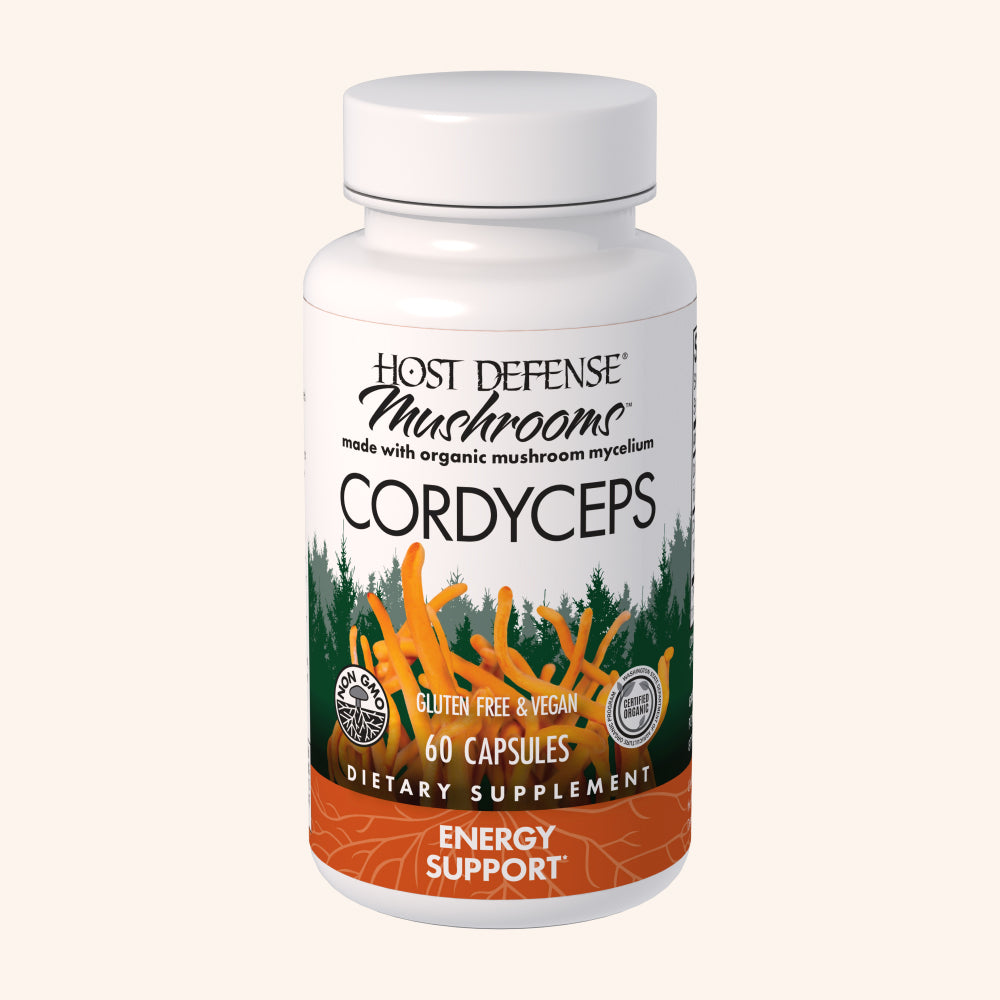
Host Defense Cordyceps Capsules
Mushroom mycelium grown on fermented organic brown rice, not a fruiting-body extract. Strain and cordycepin/beta-glucan content are not disclosed on the label.
We may earn a commission if you buy through this link, at no cost to you.
For how this compares to other named brands, see the Cordyceps hub. For dosing context from published research, see Cordyceps Dosage & Consumption.
More Cordyceps Reviews
Frequently Asked Questions
Sources
- Host Defense, Cordyceps Capsules product page: Brand's own disclosure of mycelium-on-rice source material and absence of a published beta-glucan/cordycepin percentage