
Is Host Defense Chaga Good?
Mushroom mycelium grown on fermented rice; whether any wild birch-grown Chaga sclerotium is involved isn't disclosed, and no beta-glucan (an immune-supporting carbohydrate) percentage, extraction method, or third-party testing claim is published on the brand's own product page.
What the label discloses
Host Defense's own product page describes this product as mushroom mycelium grown on a fermented rice substrate. It does not state whether the product involves any actual wild-harvested Chaga sclerotium, the form that, per this site's Chaga hub, is the only source that can contain betulinic acid and the other birch-derived compounds Chaga is best known for. Recommended serving is 2 capsules once daily.
Three things this label does not state: whether any wild sclerotium is used at all, a beta-glucan percentage, and an extraction method. Without a wild-harvested claim specifically, the compositional ceiling described on the hub page applies by default; a mycelium-on-rice product without that claim should be assumed not to contain the birch-derived compounds associated with wild Chaga. No third-party testing claim is stated on this product page either.
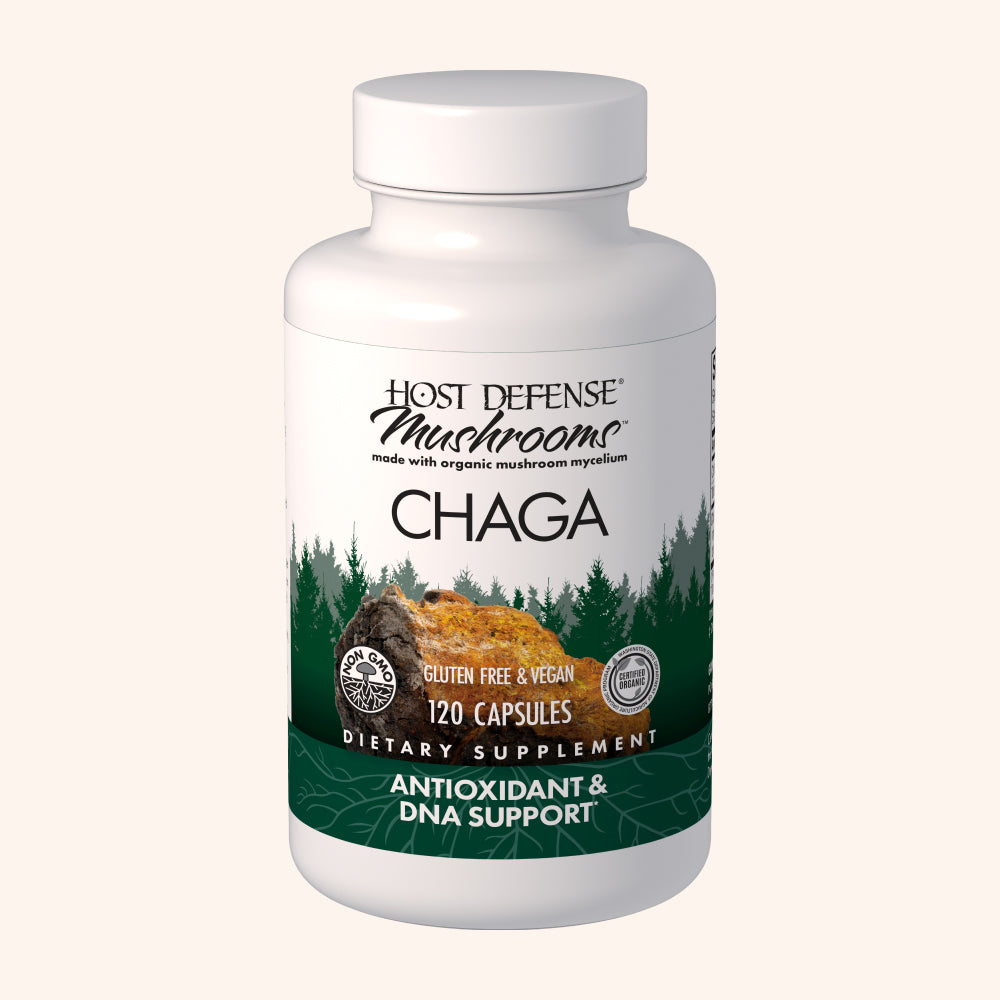
Host Defense Chaga Capsules
Mushroom mycelium grown on fermented rice. Whether any wild-harvested Chaga sclerotium is used, extraction method, and beta-glucan content are not disclosed on the label.
We may earn a commission if you buy through this link, at no cost to you.
For how this compares to other named brands, see the Chaga hub. For dosing and safety context, including the real kidney-injury case reports, see Chaga Dosage & Consumption.
More Chaga Reviews
Frequently Asked Questions
Sources
- Host Defense, Chaga Capsules product page: Brand's own disclosure of mycelium-on-rice source material and absence of a published beta-glucan percentage, extraction method, or third-party testing claim